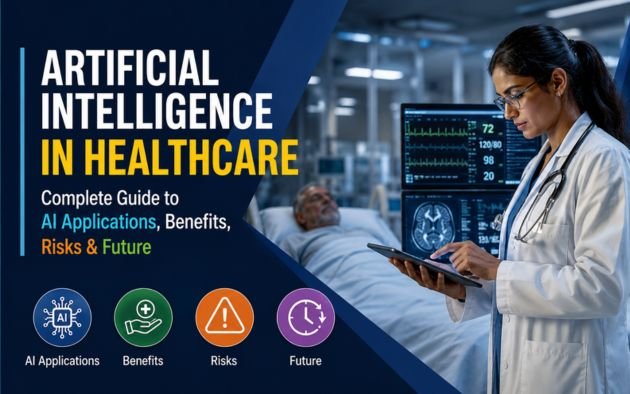
Artificial Intelligence (AI) is no longer just a futuristic concept seen in science fiction movies. Today, AI is transforming industries worldwide, and healthcare is one of the sectors experiencing the biggest revolution. From detecting diseases early to assisting doctors during surgeries, AI is changing how hospitals, clinics, and healthcare professionals deliver medical care.
Healthcare systems across the world face major challenges such as rising costs, shortage of medical professionals, delayed diagnosis, and increasing patient demands. Artificial intelligence is helping solve many of these problems by improving accuracy, speeding up medical processes, and supporting doctors in making better decisions.
In this complete guide, we will explore how AI is used in healthcare, its real-world applications, benefits, risks, future possibilities, and whether AI can truly replace human doctors.
What Is Artificial Intelligence in Healthcare?
Artificial Intelligence in healthcare refers to the use of advanced computer systems and algorithms that can analyze medical data, learn patterns, and assist healthcare professionals in diagnosis, treatment, monitoring, and patient care.
AI systems can process huge amounts of medical information much faster than humans. These systems use technologies such as:
- Machine Learning (ML)
- Deep Learning
- Natural Language Processing (NLP)
- Computer Vision
- Generative AI
AI can analyze:
- Medical images
- Patient records
- Lab reports
- Disease patterns
- Drug interactions
- Genetic information
This helps doctors make faster and more accurate decisions.
Why AI Is Becoming Important in Healthcare?
Healthcare is becoming more complex every year. Doctors and hospitals handle millions of patient records, medical reports, scans, and prescriptions daily. Human analysis alone is often not enough to manage this enormous amount of information efficiently.
AI helps healthcare systems by:
- Reducing human errors
- Improving diagnosis accuracy
- Saving time
- Automating repetitive tasks
- Supporting medical research
- Improving patient outcomes
The global AI healthcare market is also growing rapidly as hospitals invest heavily in smart healthcare technologies.
Top Real-World Applications of AI in Healthcare
AI is already being used in many areas of modern medicine. Some applications are helping doctors diagnose diseases earlier, while others are improving patient care and hospital management.
1. AI-Powered Disease Diagnosis
AI systems can analyze symptoms, medical history, and diagnostic reports to help doctors identify diseases faster.
For example:
- AI can detect cancer from X-rays and MRI scans.
- AI tools can identify heart disease risks.
- AI systems can predict stroke chances.
Many hospitals now use AI-assisted radiology systems to improve diagnosis accuracy.
➡ Related Article:
Top 10 Real-World Applications of AI in Healthcare
2. Medical Imaging and Radiology
AI-powered computer vision systems can analyze:
- CT scans
- MRI scans
- X-rays
- Ultrasounds
These systems help radiologists detect abnormalities that may be difficult for the human eye to notice.
AI imaging tools are especially useful in:
- Cancer detection
- Brain disorders
- Lung disease diagnosis
- Bone fracture analysis
3. Robotic Surgery
AI-assisted robotic surgery systems allow doctors to perform highly precise operations.
Benefits include:
- Smaller incisions
- Reduced blood loss
- Faster recovery
- Improved surgical precision
Robotic systems can also reduce the risk of complications during complex procedures.
4. AI Chatbots and Virtual Health Assistants
AI chatbots are becoming popular in healthcare because they help patients receive quick medical guidance.
These virtual assistants can:
- Answer health questions
- Schedule appointments
- Send medication reminders
- Monitor symptoms
AI healthcare chatbots improve patient engagement and reduce hospital workload.
5. Predictive Analytics
AI systems can predict future health risks using patient data and historical patterns.
Predictive AI helps in:
- Early disease prevention
- ICU patient monitoring
- Identifying high-risk patients
- Preventing hospital readmissions
Hospitals use predictive analytics to improve patient safety and reduce medical emergencies.
Generative AI in Healthcare
Generative AI is one of the fastest-growing technologies in healthcare today. It can create text, summaries, reports, and recommendations based on medical data.
Generative AI tools are helping doctors by:
- Creating medical documentation
- Summarizing patient reports
- Assisting in medical research
- Improving communication
AI-powered systems like ChatGPT are also being explored for healthcare education and patient support.
➡ Related Article:
Generative AI in Healthcare: Benefits, Risks & Future
How AI Helps Doctors During Emergencies?
Emergency medical situations require quick decisions. Even a small delay can become life-threatening.
AI helps doctors during emergencies by:
- Monitoring ICU patients in real-time
- Predicting heart attacks
- Detecting strokes early
- Assisting ambulance systems
- Prioritizing critical patients
Some AI systems can analyze vital signs and alert doctors before a patient’s condition worsens.
➡ Related Article:
How AI Is Helping Doctors During Emergency Situations
AI vs Human Doctors: Who Makes Better Decisions?
One of the most discussed questions today is whether AI can replace doctors.
The reality is that AI is highly powerful in:
- Data analysis
- Pattern detection
- Fast processing
- Diagnostic support
However, human doctors still have strengths that AI cannot fully replace:
- Emotional understanding
- Empathy
- Human judgment
- Ethical decision-making
- Communication skills
AI works best as a supportive tool rather than a replacement for healthcare professionals.
➡ Related Article:
AI vs Human Doctors: Who Makes Better Medical Decisions?
Benefits of AI in Healthcare
AI offers many advantages for both healthcare professionals and patients.
Faster Diagnosis
AI can analyze medical scans and reports within seconds, helping doctors diagnose diseases faster.
Improved Accuracy
AI reduces diagnostic errors by identifying hidden patterns in medical data.
Better Patient Care
AI systems help hospitals provide personalized treatment plans based on patient history and medical conditions.
Reduced Healthcare Costs
Automation and predictive analytics help hospitals reduce operational expenses.
Early Disease Detection
AI can identify disease risks before symptoms become severe.
Faster Drug Discovery
AI speeds up pharmaceutical research by analyzing chemical compounds and medical data.
Risks and Challenges of AI in Healthcare
Although AI has many advantages, it also comes with important risks and challenges.
Data Privacy Concerns
Healthcare data is highly sensitive. AI systems require large amounts of patient information, raising privacy concerns.
Incorrect AI Predictions
AI systems can sometimes produce inaccurate or biased results if trained on poor-quality data.
Ethical Concerns
Questions arise about:
- Responsibility for wrong diagnosis
- AI decision transparency
- Patient consent
High Implementation Costs
Advanced AI healthcare systems can be expensive for smaller hospitals and clinics.
Dependence on Technology
Over-reliance on AI may reduce human involvement in medical decisions.
Future of AI in Healthcare
The future of AI in healthcare looks extremely promising. Hospitals are expected to become smarter, faster, and more connected in the coming years.
Future healthcare technologies may include:
- AI-powered smart hospitals
- Robotic patient care
- Personalized medicine
- Wearable health monitoring devices
- Virtual healthcare assistants
- AI-generated treatment plans
By 2030, many hospitals may use AI for daily patient monitoring and hospital management.
➡ Related Article:
Future of AI in Healthcare: What Will Hospitals Look Like in 2030?
Can AI Replace Human Doctors?
The idea of AI replacing doctors creates both excitement and fear. However, most healthcare experts believe AI will support doctors rather than replace them completely.
AI is excellent at:
- Analyzing large data
- Detecting patterns
- Supporting diagnosis
But doctors provide:
- Compassion
- Human interaction
- Emotional support
- Ethical judgment
Patients often need trust and reassurance that only human healthcare professionals can provide.
The future of healthcare will likely involve collaboration between AI systems and medical experts.
Challenges Healthcare Systems Must Solve
To fully benefit from AI, healthcare systems must address several important challenges:
Regulation and Safety
Governments must create proper regulations for AI healthcare systems.
Medical Data Quality
AI depends heavily on high-quality medical data for accurate predictions.
Training Healthcare Professionals
Doctors and hospital staff need training to use AI tools effectively.
Building Patient Trust
Patients must feel confident that AI-assisted healthcare is safe and reliable.
How AI Is Transforming Patient Experience?
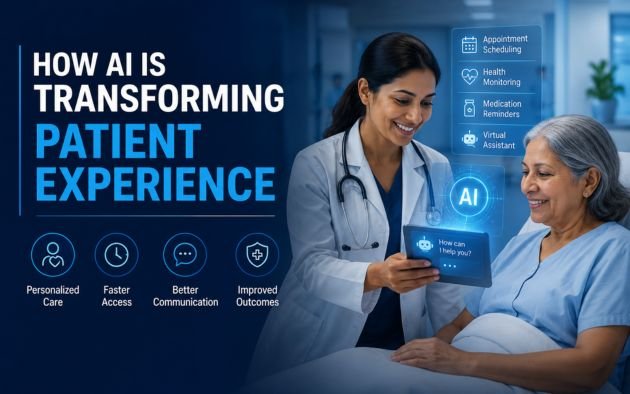
AI is also improving the patient experience in many ways.
Patients now benefit from:
- Faster appointments
- Remote healthcare support
- AI symptom checkers
- Personalized treatment recommendations
- Better communication systems
Telemedicine combined with AI is making healthcare more accessible worldwide.
The Role of AI in Medical Research
Medical researchers use AI to analyze enormous amounts of scientific data quickly.
AI helps researchers:
- Identify disease patterns
- Discover new medicines
- Predict treatment outcomes
- Analyze clinical trial results
This can significantly accelerate medical innovation.
Final Thoughts
Artificial Intelligence is transforming healthcare faster than ever before. From improving diagnosis accuracy to assisting doctors during emergencies, AI is helping create smarter and more efficient healthcare systems.
However, AI also brings challenges related to privacy, ethics, and medical responsibility. The best future for healthcare is not AI replacing doctors, but AI working together with healthcare professionals to improve patient outcomes.
As technology continues to evolve, AI will likely become one of the most important tools in modern medicine. Hospitals, doctors, and patients who adapt to these innovations early may benefit greatly from the future of intelligent healthcare.