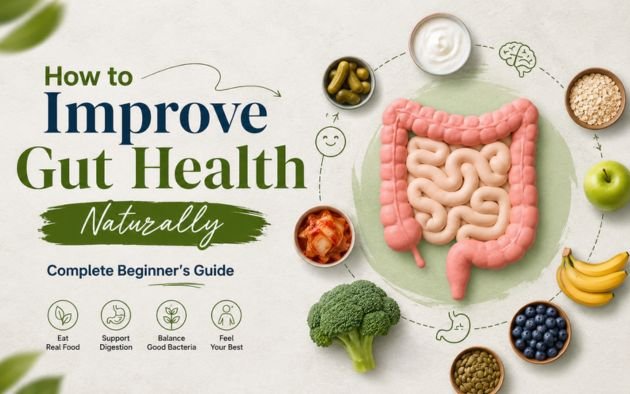
Gut health plays an important role in overall wellness. A healthy digestive system not only helps your body absorb nutrients properly but also supports immunity, energy levels, mental health, sleep quality, and skin health. In recent years, researchers have found strong links between gut health and many chronic health conditions.
If you often experience bloating, constipation, acidity, fatigue, or stomach discomfort, your digestive system may need attention. The good news is that improving gut health naturally does not require extreme diets or expensive supplements. Small daily lifestyle changes can make a noticeable difference.
What Is Gut Health?
Your gut contains trillions of microorganisms, including bacteria and fungi, that help break down food, absorb nutrients, and maintain balance inside the body. When good bacteria are present in healthy amounts, digestion works efficiently and the body functions better.
However, an imbalance in gut bacteria may lead to digestive discomfort, inflammation, low immunity, and other health issues.
A healthy digestive system supports:
- Smooth digestion
- Better immunity
- Improved sleep
- Stable energy levels
- Healthy skin
- Mental wellness
- Weight balance
Why Is Gut Health Important?
Many people ask, “Why is gut health important?” The answer is simple: your gut affects almost every system in your body.
Scientists often call the gut the “second brain” because it communicates directly with your brain through the gut-brain connection.
Importance of Gut Health for Overall Well-Being
The importance of gut health for overall well being is much greater than most people realize. Poor gut health can contribute to:
- Weak immunity
- Anxiety and stress
- Brain fog
- Fatigue
- Skin issues
- Poor sleep
- Weight gain
- Inflammation
On the other hand, a healthy gut can improve both physical and mental wellness.
Recent studies also suggest that gut health may play a role in reducing the risk of chronic diseases such as diabetes, obesity, and heart disease.
Signs of Poor Gut Health
Before learning how to improve gut health naturally, it is important to recognize the warning signs of an unhealthy gut.
Common Symptoms Include:
- Bloating
- Gas
- Constipation
- Diarrhea
- Stomach pain
- Acid reflux
- Fatigue
- Poor sleep
- Food intolerances
- Frequent illness
- Skin problems
- Brain fog
If you regularly experience these symptoms, your digestive system may need support.
How to Improve Gut Health Naturally?
Improving gut health does not require expensive supplements or extreme diets. Small daily habits can make a huge difference.
Best Food for Gut Health
One of the most effective ways to improve digestion is by eating foods that support gut health. Here are some of the best foods for gut health:
Eat More Fiber-Rich Foods
Fiber feeds the healthy bacteria in your gut and supports digestion.
- Oats
- Apples
- Bananas
- Chia seeds
- Lentils
- Broccoli
- Carrots
- Beans
Fiber also helps reduce constipation and supports regular bowel movements.
Top Foods to Improve Gut Health
1. Yogurt
Yogurt contains probiotics, which are healthy bacteria that support digestion.
2. Kefir
Kefir is a fermented milk drink packed with beneficial probiotics.
3. Kimchi
Kimchi is a Korean fermented food rich in gut-friendly bacteria.
4. Sauerkraut
This fermented cabbage contains probiotics and digestive enzymes.
5. Bananas
Bananas support good bacteria growth and improve digestion naturally.
6. Garlic
Garlic acts as a prebiotic and feeds healthy gut bacteria.
7. Ginger
Ginger reduces inflammation and improves digestion.
8. Leafy Greens
Spinach and kale help support healthy gut bacteria.
9. Whole Grains
Brown rice, oats, and quinoa improve digestion and support gut health.
10. Apples
Apples contain pectin, a fiber that promotes healthy digestion.
Adding these foods good for gut health into your daily meals can significantly improve digestive function.
Drinks to Improve Gut Health
Many people focus only on foods, but drinks to improve gut health are equally important.
Hydration helps digestion, nutrient absorption, and toxin removal.
Best Gut Health Drink Homemade Options
1. Lemon Water
Warm lemon water in the morning can support digestion and hydration.
2. Ginger Tea
Ginger tea helps reduce bloating and improves digestion naturally.
3. Kombucha
Kombucha is one of the most popular fermented drinks for gut health.
4. Kefir Drink
Kefir is rich in probiotics and supports healthy gut bacteria.
5. Apple Cider Vinegar Drink
Mixing apple cider vinegar with water may support digestion.
6. Green Tea
Green tea contains antioxidants that support gut bacteria balance.
7. Cucumber Mint Water
This refreshing homemade drink supports hydration and digestion.
Gut Health Drink Homemade Recipe
Here is a simple gut health drink homemade recipe you can try daily.
Natural Gut Health Drink Recipe
Ingredients:
- 1 glass warm water
- 1 tablespoon lemon juice
- 1 teaspoon honey
- Small piece of grated ginger
Benefits:
- Supports digestion
- Reduces bloating
- Helps detoxification
- Improves hydration
This is one of the easiest gut health drink natural remedies for beginners.
Fermented Drinks for Gut Health
Fermented drinks for gut health are rich in probiotics that help improve digestion and balance gut bacteria.
Best Fermented Drinks:
- Kombucha
- Kefir
- Buttermilk
- Probiotic yogurt drinks
- Fermented rice water
These drinks can support immunity and improve gut microbiome diversity.
Best Alcohol to Drink for Gut Health
Many people wonder if there is any best alcohol to drink for gut health. While excessive alcohol harms gut bacteria, some fermented alcoholic beverages may be less harmful in moderation.
Better Options Include:
- Red wine (in small amounts)
- Hard kombucha
- Low-sugar fermented beverages
However, limiting alcohol is still the best choice for maintaining a healthy digestive system.
Reduce Processed Foods
Processed foods can damage gut bacteria and increase inflammation.
Avoid Excess:
- Sugary drinks
- Fast food
- Fried food
- Artificial sweeteners
- Ultra-processed snacks
Instead, focus on whole, natural foods.
Manage Stress for Better Gut Health
Stress can negatively affect digestion and gut bacteria balance.
Natural Stress Management Tips:
- Meditation
- Deep breathing
- Walking
- Exercise
- Good sleep habits
- Spending time outdoors
Mental health and gut health are closely connected.
Sleep and Gut Health Connection
Poor sleep can damage gut bacteria balance and increase inflammation.
Tips for Better Sleep:
- Sleep 7–8 hours daily
- Avoid screens before bedtime
- Reduce caffeine at night
- Maintain a regular sleep schedule
Healthy sleep supports overall digestive wellness.
Exercise and Gut Health
Regular physical activity improves digestion and supports healthy gut bacteria.
Best Exercises:
- Walking
- Yoga
- Cycling
- Strength training
- Stretching
Even 30 minutes of daily exercise can improve gut function.
Natural Supplements for Gut Health
Some natural supplements may support digestion and improve gut health naturally.
Helpful Supplements:
- Probiotics
- Prebiotics
- Digestive enzymes
- Psyllium husk
Always consult a healthcare professional before starting supplements.
Foods That Harm Gut Health
Knowing what to avoid is just as important as knowing foods to improve gut health.
Limit
- Excess sugar
- Alcohol
- Processed meat
- Artificial sweeteners
- Excessive antibiotics
These can disrupt the balance of healthy gut bacteria.
Gut Health and Mental Health
Researchers have discovered a strong connection between gut health and mental health.
A healthy gut may help
- Reduce stress
- Improve mood
- Support brain function
- Lower anxiety symptoms
This is because the gut produces important neurotransmitters like serotonin.
Daily Routine for Better Gut Health
Here is a simple daily routine to improve digestion naturally.
Morning
- Drink warm lemon water
- Eat a fiber-rich breakfast
- Go for a short walk
Afternoon
- Stay hydrated
- Eat balanced meals
- Avoid sugary snacks
Evening
- Eat a light dinner
- Reduce screen time
- Sleep on time
Consistency is key to long-term gut health improvement.
Common Mistakes That Damage Gut Health
Avoid these habits if you want a healthy digestive system.
Mistakes Include:
- Skipping meals
- Eating too much junk food
- Not drinking enough water
- Poor sleep habits
- Chronic stress
- Excess antibiotics
Small changes can create big improvements over time.
Connection Between Gut Health and Mental Wellness
Researchers continue to study the strong relationship between the digestive system and the brain. A healthy gut may help support mood, focus, and emotional well-being.
The digestive system also helps produce neurotransmitters like serotonin, which are linked to mood regulation.
Supporting gut health may positively affect both physical and mental wellness.
Final Thoughts
A healthy digestive system supports much more than digestion alone. It affects immunity, energy, mental wellness, sleep, and overall quality of life.
Simple habits like eating fiber-rich foods, staying hydrated, exercising regularly, managing stress, and improving sleep can help support long-term gut health naturally.
Start with small lifestyle changes and stay consistent. Over time, these habits can lead to noticeable improvements in digestion and overall well-being.
Remember, a healthy gut is the foundation of a healthy life.