Artificial Intelligence (AI) is rapidly transforming the healthcare industry. What once seemed like futuristic technology is now becoming a major part of hospitals, clinics, laboratories, and medical research centers around the world. From helping doctors detect diseases early to improving patient care and speeding up medical research, AI is changing how modern healthcare works.
Many challenges have been faced by the industry these days, including increasing medical costs, a shortage of experienced healthcare professionals, and a lot more. AI is helping solve many of these problems by improving efficiency, reducing human errors, and supporting doctors with data-driven insights.
The use of AI in healthcare is expected to grow significantly over the next decade as hospitals continue investing in smart technologies and digital healthcare systems.
In this article, we will explore the top real-world applications of AI in healthcare and how these technologies are improving patient outcomes, hospital operations, and medical decision-making.
What Is AI in Healthcare?
Artificial Intelligence in healthcare involves the use of smart computer technologies that can study medical information, identify patterns, and support healthcare professionals in carrying out medical tasks with greater accuracy and efficiency.
AI technologies commonly used in healthcare include:
- Machine Learning (ML)
- Deep Learning
- Natural Language Processing (NLP)
- Computer Vision
- Generative AI
These technologies can process huge amounts of medical information much faster than humans, helping doctors make better decisions and improving patient care.
➡ Related Guide:
Artificial Intelligence in Healthcare: Complete Guide to AI Applications, Benefits, Risks & Future
Why AI Is Becoming Essential in Modern Healthcare?
Modern healthcare generates massive amounts of data every day, including:
- Medical scans
- Patient records
- Laboratory reports
- Prescriptions
- Clinical research
Managing and analyzing this information manually can be difficult and time-consuming. AI helps healthcare providers process this data efficiently and identify important patterns that may improve diagnosis and treatment.
AI is becoming important because it helps:
- Improve diagnosis accuracy
- Reduce medical errors
- Save time for healthcare professionals
- Improve patient monitoring
- Reduce operational costs
- Support medical research
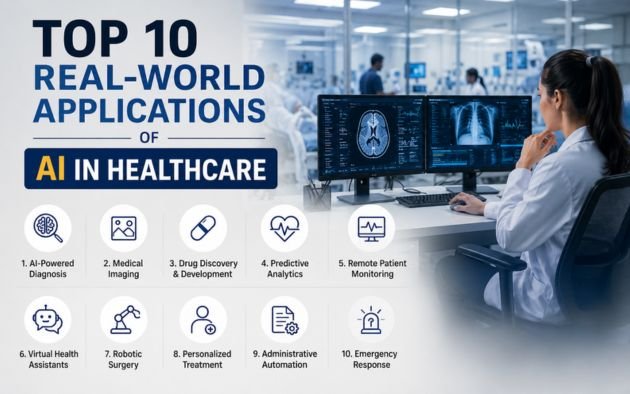
Now let’s explore the most important real-world applications of AI in healthcare.
1. AI-Powered Disease Diagnosis
One of the most important applications of AI in healthcare is disease diagnosis.
AI systems can analyze:
- Symptoms
- Medical history
- Laboratory reports
- Imaging scans
to help doctors identify diseases faster and more accurately.
AI-powered diagnostic systems are especially useful for detecting:
- Cancer
- Heart disease
- Diabetes
- Neurological disorders
- Lung diseases
For example, AI tools can analyze mammograms and identify early signs of breast cancer that may sometimes be missed during manual analysis.
Early diagnosis can improve treatment success rates and save lives.
2. Medical Imaging and Radiology
Medical imaging is one of the fastest-growing areas of AI adoption in healthcare.
AI-powered computer vision systems can analyze:
- X-rays
- CT scans
- MRI scans
- Ultrasounds
These systems help radiologists detect abnormalities more efficiently.
AI imaging tools are now used for:
- Tumor detection
- Brain scan analysis
- Bone fracture identification
- Lung infection detection
- Organ damage analysis
AI can process imaging data quickly, helping doctors diagnose patients faster during critical situations.
3. Robotic Surgery
AI-assisted robotic surgery is improving surgical precision and reducing complications during medical procedures.
Robotic surgical systems allow surgeons to perform complex operations with greater control and accuracy.
Benefits of robotic surgery include:
- Smaller incisions
- Reduced blood loss
- Faster recovery
- Lower infection risk
- Improved surgical precision
AI-assisted robotic systems are now used in:
- Cardiac surgery
- Orthopedic surgery
- Neurosurgery
- Gynecological procedures
These technologies help surgeons perform delicate procedures more effectively.
4. Virtual Health Assistants and AI Chatbots
AI-powered virtual assistants and healthcare chatbots are becoming increasingly common in hospitals and healthcare apps.
These systems can:
- Answer patient questions
- Provide symptom guidance
- Schedule appointments
- Send medication reminders
- Monitor chronic conditions
AI chatbots help improve patient communication and reduce the workload on healthcare staff.
Many healthcare organizations now use AI assistants to provide 24/7 support for patients.
➡ Related Article:
Generative AI in Healthcare: Benefits, Risks & Future
5. Predictive Analytics for Patient Care
Predictive analytics uses AI to identify future health risks by analyzing patient data and medical history.
AI can help doctors:
- Predict disease risks
- Identify high-risk patients
- Prevent hospital readmissions
- Monitor ICU patients
- Detect early warning signs
Hospitals use predictive AI systems to improve patient safety and provide preventive care before conditions become severe.
For example, AI can identify patients who are at risk of developing sepsis or heart complications before symptoms worsen.
6. Personalized Treatment and Precision Medicine
Every patient is different, and AI helps doctors create more personalized treatment plans.
AI analyzes:
- Genetic information
- Lifestyle factors
- Medical history
- Medication responses
to recommend treatments that may work best for individual patients.
This approach is known as precision medicine.
Personalized healthcare can improve treatment effectiveness while reducing side effects and unnecessary procedures.
7. AI in Drug Discovery and Medical Research
Developing new medicines traditionally takes many years and costs billions of dollars. AI is helping accelerate this process.
These systems can:
- Analyze chemical compounds
- Predict drug effectiveness
- Identify potential side effects
- Support clinical trials
AI helps pharmaceutical companies reduce research time and improve the efficiency of drug development.
During global health emergencies, AI has played an important role in speeding up medical research and vaccine development.
8. Remote Patient Monitoring
Remote healthcare monitoring has become increasingly important, especially after the rise of telemedicine.
AI-powered wearable devices and monitoring systems can track:
- Heart rate
- Blood pressure
- Oxygen levels
- Glucose levels
- Sleep patterns
These systems help doctors monitor patients remotely and detect health problems early.
Remote patient monitoring is especially useful for:
- Elderly patients
- Chronic disease management
- Post-surgery recovery
- Rural healthcare services
AI makes healthcare more accessible and convenient for patients.
9. AI in Emergency and Critical Care
Emergency medicine requires fast and accurate decisions. AI is helping doctors respond more quickly during critical situations.
AI systems can:
- Monitor ICU patients in real-time
- Predict medical emergencies
- Detect strokes early
- Assist ambulance systems
- Prioritize emergency patients
Some hospitals use AI-powered monitoring systems that alert doctors if a patient’s condition suddenly worsens.
➡ Related Article:
How AI Is Helping Doctors During Emergency Situations
10. Hospital Management and Administrative Automation
AI is also improving hospital operations and reducing administrative workload.
Healthcare facilities use AI for:
- Appointment scheduling
- Medical record management
- Billing automation
- Staff management
- Workflow optimization
Administrative automation allows healthcare professionals to spend more time focusing on patient care instead of paperwork.
AI-driven hospital management systems can also improve efficiency and reduce operational costs.
Benefits of AI Applications in Healthcare
AI applications provide many important advantages for both patients and healthcare providers.
Faster Medical Decisions
AI systems analyze data quickly, helping doctors make faster decisions during diagnosis and treatment.
Improved Accuracy
AI reduces the risk of human errors in medical analysis and imaging.
Better Patient Outcomes
Early diagnosis and personalized treatment can improve recovery rates and overall patient health.
Lower Healthcare Costs
Automation and predictive analytics help hospitals reduce unnecessary expenses.
Improved Healthcare Accessibility
AI-powered remote healthcare tools allow patients to receive medical support from anywhere.
Challenges and Risks of AI in Healthcare
Although AI offers many benefits, it also comes with several challenges.
Data Privacy Concerns
Medical data is highly sensitive, and AI systems require large amounts of patient information.
Ethical Issues
Questions remain about:
- AI decision-making
- Medical responsibility
- Patient consent
High Implementation Costs
Advanced AI healthcare systems can be expensive for smaller healthcare facilities.
Dependence on Technology
Healthcare providers must avoid over-reliance on AI and maintain human medical decision-making.
Balanced use of AI is important for safe and effective healthcare.
Future of AI Applications in Healthcare
The future of AI in healthcare looks extremely promising. Hospitals are expected to become smarter, faster, and more connected in the coming years.
Future healthcare innovations may include:
- AI-powered smart hospitals
- Robotic healthcare assistants
- Predictive disease prevention
- AI-generated treatment plans
- Advanced wearable health devices
➡ Related Article:
Future of AI in Healthcare: What Will Hospitals Look Like in 2030?
Can AI Replace Healthcare Professionals?
AI is highly effective at analyzing data and identifying patterns, but healthcare also requires empathy, communication, and ethical judgment.
Human doctors provide:
- Emotional support
- Patient trust
- Clinical experience
- Human understanding
AI works best as a supportive tool that helps healthcare professionals make better decisions.
➡ Related Article:
AI vs Human Doctors: Who Makes Better Medical Decisions?
Final Thoughts
Artificial Intelligence is transforming healthcare in ways that were once impossible to imagine. From disease diagnosis and robotic surgery to predictive analytics and remote patient monitoring, AI is helping improve medical care across the world.
As AI technology continues to evolve, healthcare systems may become more efficient, personalized, and accessible. However, responsible use of AI remains important to ensure patient safety, data privacy, and ethical healthcare practices.
The future of healthcare will likely involve strong collaboration between AI technologies and healthcare professionals working together to improve patient outcomes and medical innovation.