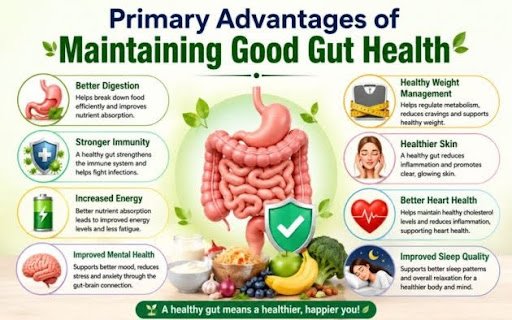
Gut health has become one of the most discussed health topics in recent years, and for good reason. Your gut is not only responsible for digesting food but also plays a major role in your immunity, energy levels, mental health, skin condition, and overall wellness. A healthy gut can improve your quality of life in ways many people do not realize.
In today’s fast-paced lifestyle, poor eating habits, stress, lack of sleep, and processed foods are damaging digestive systems worldwide. Because of this, more people are searching for natural ways to improve their gut health and maintain a healthier lifestyle.
In this article, we will explore the primary advantages of maintaining good gut health, how the digestive system affects the body, and practical tips to naturally improve gut function.
What Is Gut Health?
Gut health refers to the balance and proper functioning of microorganisms living in your digestive tract. These microorganisms include good bacteria, fungi, and other microbes that help your body digest food, absorb nutrients, and protect against harmful bacteria.
The digestive system contains trillions of bacteria, often called the gut microbiome. When this microbiome is balanced, your body functions properly. However, when harmful bacteria grow more than beneficial bacteria, it can lead to digestive problems and other health issues.
Common signs of poor gut health include:
- Bloating
- Gas
- Constipation
- Diarrhea
- Fatigue
- Poor sleep
- Skin problems
- Frequent illness
- Food intolerance
Maintaining good gut health helps your body perform at its best naturally.
Primary Advantages of Maintaining Good Gut Health
1. Better Digestion and Nutrient Absorption
One of the biggest benefits of good gut health is improved digestion. A healthy digestive system breaks down food efficiently and absorbs important nutrients properly.
When your gut is healthy:
- Food digests faster
- Nutrients absorb better
- Bloating decreases
- Constipation becomes less common
- Stomach discomfort reduces
Poor gut health can prevent the body from absorbing essential vitamins and minerals properly, leading to weakness and fatigue.
Good bacteria in the gut also help produce digestive enzymes that support smooth digestion and improve bowel movement.
2. Stronger Immune System
Did you know that a large part of your immune system is connected to your gut?
A healthy gut helps the body fight harmful bacteria, viruses, and infections. Beneficial gut bacteria strengthen the immune response and help prevent illness.
People with poor gut health may experience:
- Frequent colds
- Weak immunity
- Increased inflammation
- Allergies
Maintaining a balanced gut microbiome supports a stronger defense system and helps your body stay healthy naturally.
3. Increased Energy Levels
Many people feel tired because their digestive system is not functioning properly. Poor digestion can reduce nutrient absorption, which affects energy production in the body.
A healthy gut helps absorb:
- Iron
- Vitamin B12
- Magnesium
- Healthy fats
- Protein
These nutrients are essential for maintaining energy throughout the day.
When your gut health improves, your body converts food into energy more efficiently, helping you feel active and refreshed.
4. Improved Mental Health and Mood
The gut and brain are closely connected through something called the “gut-brain connection.” Scientists often call the gut the “second brain” because it produces important chemicals that affect mood and emotions.
A healthy gut can help:
- Reduce stress
- Improve mood
- Support better sleep
- Lower anxiety
- Improve mental clarity
The gut produces serotonin, a chemical linked to happiness and emotional balance. Poor gut health may contribute to mood swings and mental fatigue.
Maintaining gut health naturally supports emotional wellness and brain function.
5. Healthy Weight Management
Good gut health may also help maintain a healthy body weight. Beneficial gut bacteria influence how the body stores fat, controls hunger, and manages blood sugar levels.
People with balanced gut bacteria often experience:
- Better metabolism
- Reduced cravings
- Improved appetite control
- Easier weight management
On the other hand, unhealthy eating habits and poor digestion may increase inflammation and contribute to weight gain.
Adding fiber-rich foods and probiotics to your diet can help improve digestion and support healthy weight goals.
6. Healthier Skin
Your skin often reflects the condition of your digestive system. Poor gut health may contribute to skin problems such as:
- Acne
- Eczema
- Dry skin
- Redness
- Inflammation
When toxins and harmful bacteria build up in the digestive system, they can affect skin appearance.
A healthy gut helps properly remove waste and reduce inflammation in the body, which may naturally improve skin health.
Many people notice clearer and healthier skin after improving their diet and gut health habits.
7. Reduced Inflammation in the Body
Chronic inflammation is linked to many health conditions, including diabetes, heart disease, obesity, and digestive disorders.
A healthy gut microbiome helps control inflammation levels in the body. Beneficial bacteria produce compounds that protect the gut lining and reduce harmful inflammation.
By maintaining good gut health, you may lower the risk of chronic diseases and support long-term wellness.
8. Better Heart Health
Research suggests that gut health can influence heart health as well. Certain gut bacteria help regulate cholesterol levels, blood pressure, and inflammation.
A balanced digestive system may support:
- Healthy cholesterol
- Better blood circulation
- Reduced risk of heart disease
Eating fiber-rich and fermented foods can naturally support both gut and heart health.
9. Improved Sleep Quality
Poor digestion and an unhealthy gut can affect sleep patterns. Since the gut produces serotonin and other important hormones, maintaining a healthy gut may improve sleep quality.
People with better gut health often experience:
- Deeper sleep
- Better relaxation
- Reduced stress
- Improved recovery
Good sleep also supports digestion, creating a healthy cycle for overall wellness.
Best Foods for Good Gut Health
Eating the right foods for gut health is one of the best ways to maintain it naturally.
Probiotic Foods
Probiotics contain beneficial bacteria that improve gut balance.
Examples include:
- Yogurt
- Kefir
- Kimchi
- Sauerkraut
- Buttermilk
Prebiotic Foods
Prebiotics feed healthy gut bacteria and support their growth.
Examples include:
- Garlic
- Onion
- Bananas
- Oats
- Apples
Fiber-Rich Foods
Fiber improves digestion and supports healthy bowel movement.
Examples include:
- Whole grains
- Vegetables
- Fruits
- Beans
- Lentils
Hydrating Foods and Water
Staying hydrated supports digestion and prevents constipation.
Drink enough water daily and include water-rich foods like cucumber and watermelon.
Habits That Damage Gut Health
To maintain a healthy digestive system, avoid habits that harm gut bacteria.
Excess Processed Foods
Highly processed foods and sugary snacks may reduce beneficial bacteria.
Lack of Sleep
Poor sleep can negatively affect digestion and gut balance.
Stress
Chronic stress may damage gut health and cause digestive discomfort.
Excessive Antibiotic Use
Overusing antibiotics can kill both harmful and beneficial bacteria.
Low Fiber Diet
A diet low in fiber weakens gut bacteria diversity and digestive health.
Simple Tips to Improve Gut Health Naturally
Here are practical ways to maintain good gut health:
- Eat more natural foods
- Include probiotics daily
- Increase fiber intake gradually
- Drink enough water
- Exercise regularly
- Reduce stress through meditation or yoga
- Sleep 7–8 hours daily
- Avoid overeating processed foods
Small lifestyle changes can create major improvements in digestive health over time.
Final Thoughts
Maintaining good gut health is one of the most important steps toward overall wellness. A healthy digestive system supports digestion, immunity, energy, mental health, skin health, heart health, and even sleep quality.
Modern lifestyles often damage gut bacteria through unhealthy food choices, stress, and lack of sleep. However, simple dietary and lifestyle changes can naturally improve gut function and help the body perform better.
Adding probiotic foods, eating more fiber, staying hydrated, and reducing processed foods are some of the easiest ways to support a healthier gut.
When your gut is healthy, your entire body benefits. Investing in gut health today can lead to better physical and mental well-being for years to come.